 (972) 274-5277



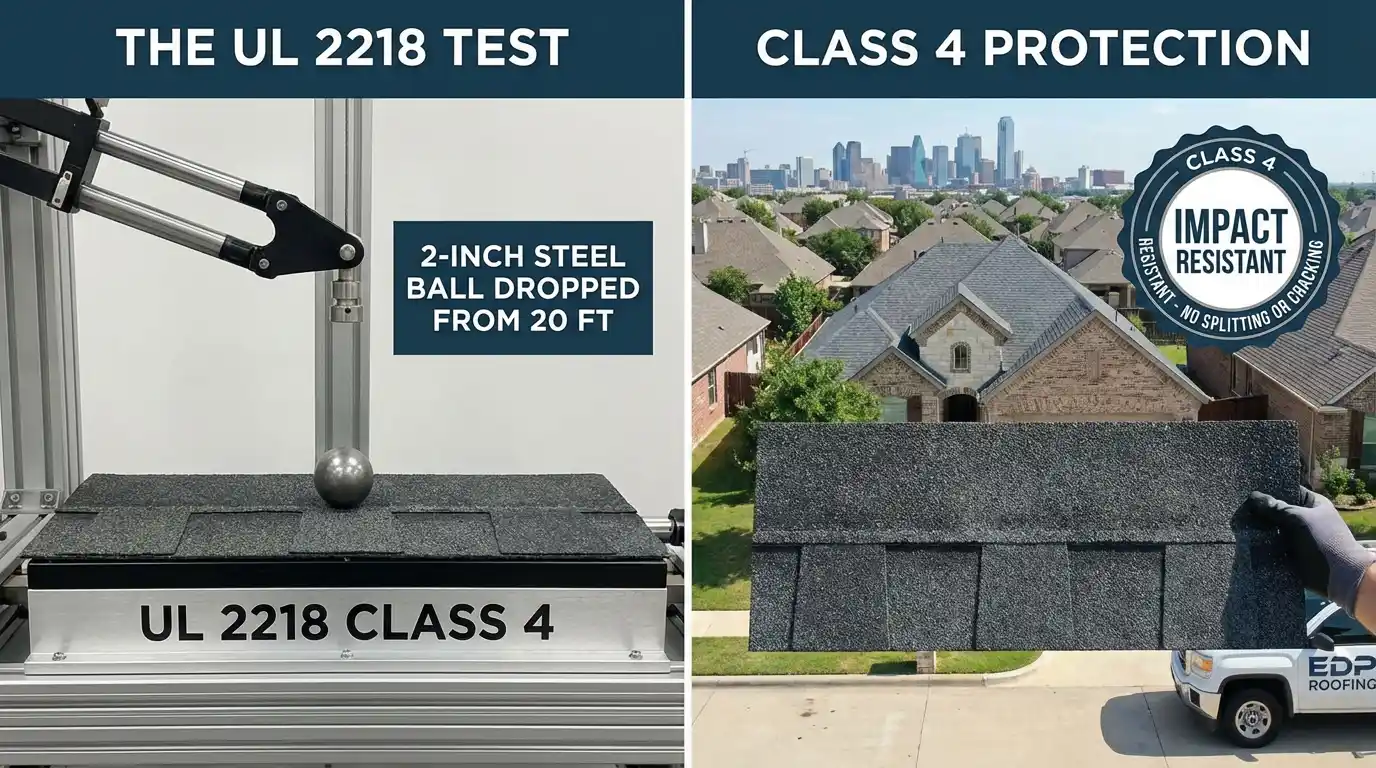
A Class 4 roof features impact resistant shingles that pass the industry’s highest durability test. For Dallas homeowners, this can lead to significant homeowners insurance discounts, but the largest premium reductions are typically reserved for those who install a complete, verifiable roofing system that meaningfully reduces the insurer’s risk of a claim.
As a Dallas homeowner, you know the sound. It starts as a few taps, then builds to a roar—the unmistakable sound of a hailstorm descending on your neighborhood. Here in North Texas, living in the heart of “Hail Alley,” severe weather isn’t a possibility; it’s a certainty. This reality has driven thousands of homeowners to ask us at EDP Roofing the same critical question: “Will installing a Class 4 roof lower my insurance?”
The short answer is yes, it often can. However, the full answer is more complex and far more important for your home’s protection and your financial well-being. Securing a meaningful, long-term insurance discount depends less on the “Class 4” product label and more on adopting a complete, science-backed roofing system that verifiably reduces an insurer’s risk of a costly claim. Let’s break down what that means for your home in Dallas, TX.
Beyond the Label: What a “Class 4” Rating Actually Means
When we talk about a Class 4 roof, we are referring to its impact resistance rating. This rating comes from a standardized test conducted by Underwriters Laboratories, known as the UL 2218 impact test. During this test, a two-inch steel ball is dropped from a height of 20 feet onto the roofing material twice in the same spot. To achieve a Class 4 rating—the highest available—the shingle, composite tile, or metal panel cannot show any signs of splitting or cracking.
Many excellent impact resistant shingles from manufacturers like GAF, Owens Corning, and CertainTeed carry this rating. Products like GAF ArmorShield II, Owens Corning TruDefinition® DURATION FLEX®, and CertainTeed NorthGate® are engineered with advanced technology, such as SBS Modified Asphalt (Styrene-Butadiene-Styrene), which gives the shingles a rubber-like flexibility to better absorb impact.
But here is the critical point that many roofing contractors fail to explain: the UL 2218 test is a product rating, not a performance guarantee for your entire roof. It certifies that the shingle itself can withstand a specific impact in a controlled lab. It tells you nothing about:
- Installation Quality: Was the shingle fastened correctly to withstand the high winds that often accompany a Dallas hailstorm?
- The Underlayment: Is the secondary water barrier beneath the shingles robust enough to prevent leaks if a shingle is compromised?
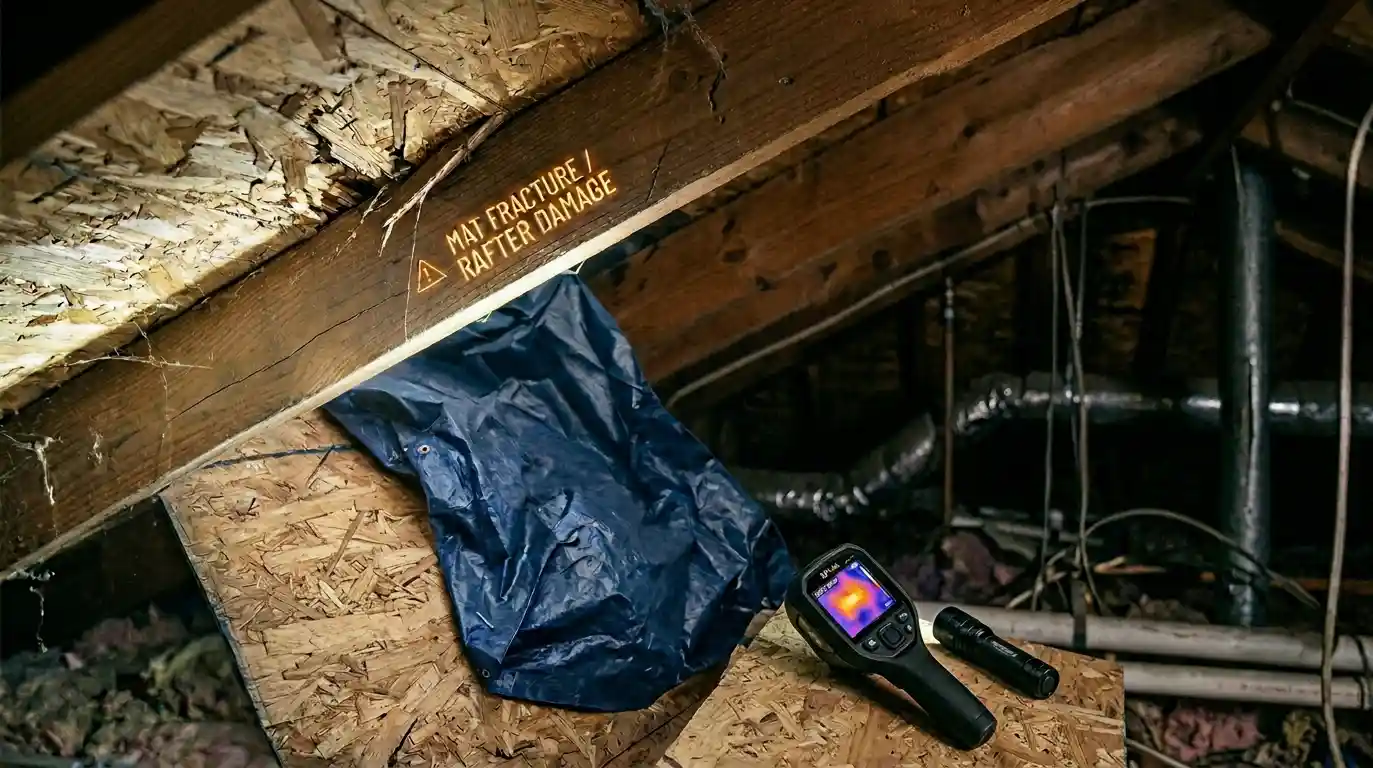
- Ventilation and Decking: Is the underlying roof deck solid? Is the attic properly ventilated to prevent heat and moisture from prematurely aging the shingles from below?
A Class 4 shingle installed improperly or on a compromised foundation is the weak link that leads to storm damage and a denied insurance claim. The true durability of your roof lies in the strength of the entire roofing system.
The Dallas Discount Reality: Thinking Like Your Insurance Company
Insurance companies are in the business of risk management. Every year, they pay out billions for weather-related claims. In fact, severe convective storms in 2023 resulted in over $50 billion in insured losses, making it the costliest year ever for these types of storms according to the Insurance Institute for Business & Home Safety (IBHS). A significant portion of that financial burden comes from roof replacements right here in the DFW Metroplex.
Because of this, insurers are shifting their strategy. They’re moving away from simply rewarding a single product label and are beginning to reward homeowners who adopt a holistic, verifiable approach to resilience. They want proof that your roof is less likely to result in a claim.
This is why you’ll see the phrase “may be eligible for a discount” in your home insurance policy. The largest and most consistent premium credits, sometimes up to 35%, are reserved for homeowners who can prove they’ve built a complete system that minimizes the insurer’s risk. This is where standards like the FORTIFIED Roof program come in. Developed by the IBHS, a FORTIFIED Roof isn’t just about using Class 4 shingles; it’s a comprehensive method that dictates stronger roof decking, a sealed roof deck, better attachment methods, and impact-resistant materials. It provides a certificate that gives your insurance agent undeniable proof of superior property protection.
A Tale of Two Roofs in Dallas
Imagine two homes side-by-side in a Richardson neighborhood during a severe storm. One has Class 4 shingles nailed to a standard roof deck with basic felt underlayment. The other has a FORTIFIED Roof system, which includes those same Class 4 shingles but also features a sealed roof deck with an impact resistant underlayment and enhanced fastening. When the hail and wind hit, the first roof might lose shingles or suffer a leak through a compromised area. The second, with its integrated system, holds strong. To an insurer, the second home represents a much lower risk.
The Real ROI is Claim Avoidance, Not Just a Monthly Discount
While a reduction in your annual premium is an attractive benefit, the primary financial advantage of a superior roofing system is avoiding the catastrophic costs of a failure. A complete roof replacement in our area is a major expense. Estimates show that in Texas, a new roof typically costs between $6,777 and $20,531, with specific needs for hail-resistant options in Dallas-Fort Worth’s ‘hail alley’ according to This Old House.
Before your insurance company even writes a check for that replacement cost value (RCV), you have to pay your deductible, which can easily be 1-2% of your home’s value—often thousands of dollars out of pocket. This doesn’t even account for the immense stress of the claims process, the potential for interior water damage to your belongings, or the hassle of living under a tarp while waiting for storm damage repair.
This is where an experienced local roofing company becomes an invaluable partner. As one of our clients recently shared, “What really set them apart was how they went above and beyond by helping deal with my insurance company, which was being difficult.” Navigating an insurance claim is part of the protection we provide. The ultimate return on investment comes from having the peace of mind that your roof is built to withstand the next North Texas storm, helping you avoid a claim altogether.
Comparing Your Options: Shingles vs. Systems
Understanding the difference between simply using a rated product and installing a resilient system is key to making an informed decision. Here’s a breakdown of the pros and cons.
- Individual ‘Class 4’ Shingles
- Pros: This is an excellent starting point for better protection. The upfront cost is lower than a full system upgrade, and many top-tier asphalt shingles offer great curb appeal. You will likely qualify for at least a basic insurance discount.
Cons: This approach ignores other critical failure points. It doesn’t guarantee protection against wind uplift or leaks from failed underlayment. The insurance discount may be minimal, and you’re still vulnerable to damage that could lead to a costly deductible payment.
- Complete FORTIFIED Roofing Systems
- Pros: This represents the gold standard in residential storm resistant roofing. The system approach addresses the entire structure for maximum durability and roof longevity. It provides verifiable proof to your insurer, unlocking the highest possible premium credits and significantly reducing the likelihood of a future claim.
Cons: The primary drawback is the higher upfront roof installation cost. It also requires a specially trained and certified roofing contractor to ensure the installation meets the strict FORTIFIED standard.
Just as scientific research shows a ‘system of actions’ is the most effective way to reduce a home’s risk from wildfire embers as demonstrated by the IBHS, the same principle applies to hail and wind. A systems-based approach provides superior protection.
Making the Right Choice for Your Needs
So, are class 4 shingles worth it in Texas? Absolutely. But the best path forward depends on your priorities, your budget, and your tolerance for risk. There isn’t one perfect answer for every homeowner in Dallas or Collin County, so let’s look at a few common profiles.
The ‘Discount-Driven’ Homeowner
If your primary motivation is lowering your homeowners insurance premium, a Class 4 shingle is your entry ticket. However, don’t stop there. To maximize your savings, ask your insurance agent precisely what documentation they need for their best policy endorsement. Often, demonstrating upgraded underlayment or providing a roof inspection certificate from a reputable contractor can boost your discount. Focus on quality installation, as even the best shingle won’t earn you a discount if it blows off in the first storm.
The ‘Storm-Weary’ Veteran
You’ve been through a difficult insurance claim before. You remember the hassle, the deductible, and the anxiety of waiting for repairs. For you, the value of a complete roofing system like a FORTIFIED Roof far outweighs the higher initial investment. Your goal is resilience and peace of mind. Partnering with a contractor who understands insurance advocacy is crucial. As one of our customers, who had a previous bad experience, noted: “Tony made the process a pleasant one, explaining everything that needed to be done (and corrected from the previous poorly-installed roof). His price was fair and he took care of some extra things without charging me.”
The ‘Asset Protector’
You view your home as your most significant investment. The roof isn’t just a cover; it’s a critical component of your property’s protection, safety, and long-term value. For you, the decision is about risk mitigation and investing in the best available technology. A science-backed, third-party-verified system is the logical choice. It not only provides the highest level of protection but also enhances your property value and curb appeal, making it a sound financial decision from every angle.
Ultimately, choosing the right roof for your Dallas home is a decision about long-term durability, financial sense, and security. It’s about more than just a shingle; it’s about building a shield for your family and your investment. Here at EDP Roofing, we specialize in helping Dallas, TX homeowners navigate these choices, from understanding the nuances of insurance underwriting to installing a complete roofing system built to withstand the worst of Texas weather. For an honest assessment of your roof and a clear path toward real protection, contact our team for a free consultation today.